
"Why Can't My Child Sit Still?" Learning Styles, Movement & ADHD at School
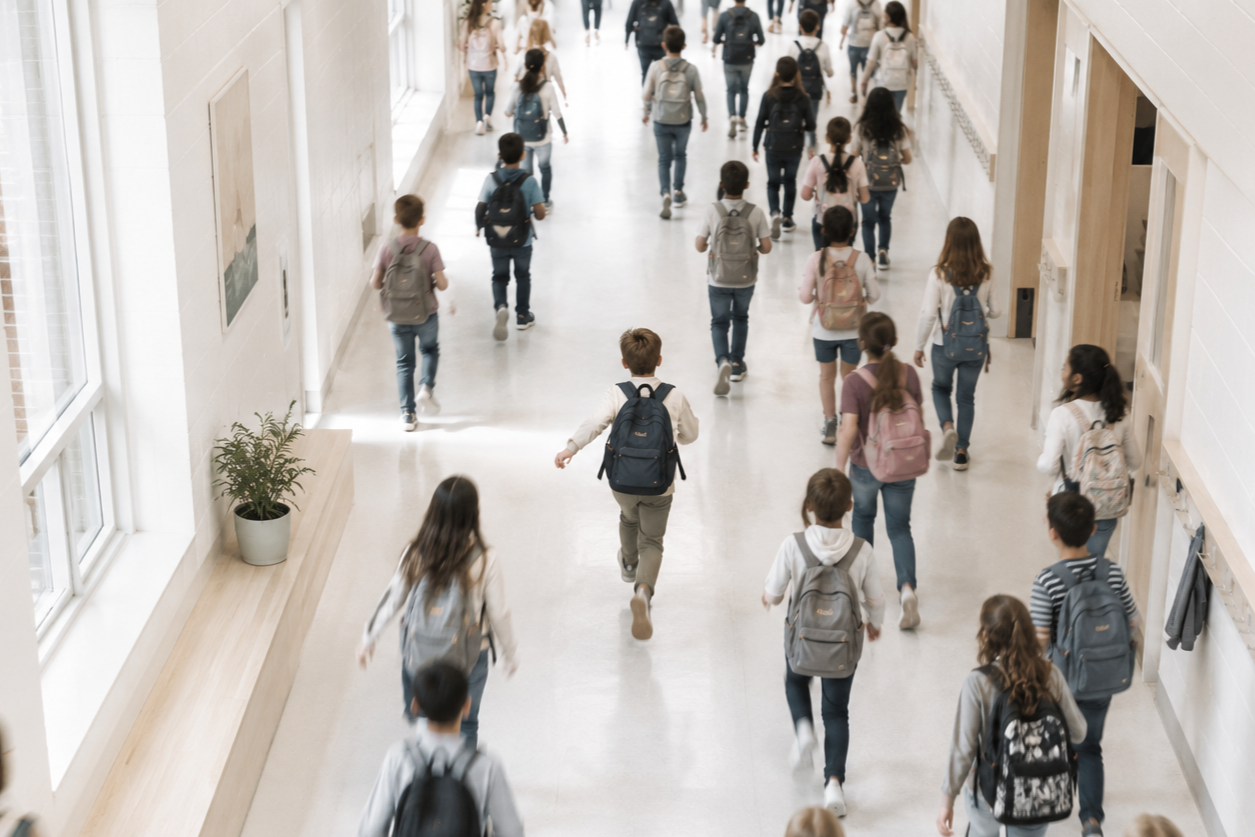
"Why can't my child sit still?"
If you've ever asked this, sometimes in frustration, sometimes in worry, you're in good company.
Here's a reframe that changes everything for a lot of families: what looks like restlessness or a refusal to settle down is often just a sign of a kinesthetic (movement-based) learning style.
Many children are simply wired to move. Their constant motion isn't defiance, it's a physical way of engaging with and processing the world. Once you understand that, your child's behaviour at school starts to make a lot more sense.
So does this mean my child has ADHD?
Not necessarily.
Some movement-driven kids do have ADHD, and a constant need to move can be one marker of that kind of brain. But plenty of children who can't sit still simply learn best through movement and hands-on experience, with no attention disorder involved.
The point isn't to rush to label your child one way or the other. It's to recognize that the need to move is real, and to make sure school works with it instead of against it. If you do have concerns about ADHD, that's worth exploring with a professional, but a child who learns by moving is not automatically a child with a disorder.
What a kinesthetic learner looks like
Children who are wired to move often:
Need physical activity in order to focus
Struggle with traditional desk-and-chair, sit-still-and-listen setups
Learn far better through interactive, hands-on experiences
Think while moving, fidgeting, pacing, using their hands
None of that is a flaw. It's a learning style. The trouble starts when the learning environment doesn't accommodate it.
Why these kids can struggle in a traditional classroom
Here's the hard part. Traditional schooling often emphasizes stillness and listening, which is genuinely difficult for a child who needs to move to process information.
As a result, a perfectly capable kinesthetic learner may:
Seem disruptive, fidgety, or uninterested
Get mistakenly labelled as having "attention problems"
Find long stretches of inactivity exhausting, which then hurts their academic performance
In other words, the child isn't failing the classroom, the classroom design is failing the child. And over time, a kid who's constantly told to "settle down" can start to believe something is wrong with them. That's the part I most want to prevent.
What actually helps a child who needs to move
The good news: there are concrete strategies that make a real difference, and many can be used at home and requested at school.
Build in movement. Frequent breaks, errands, stretching, or a few minutes of activity before focused work.
Offer flexible seating. Standing desks, wobble stools, a cushion, or even the freedom to work on the floor.
Choose hands-on over theoretical. Manipulatives, building, role-play, and real-world tasks beat passive listening every time.
Channel the energy. Daily physical activity isn't a reward to be taken away, it's a foundation that makes focus possible.
Reframe the fidgeting. A fidget tool or doodling can actually support concentration rather than break it.
The kind of school where movement-driven kids thrive
When you're choosing or evaluating a school for an active learner, look for:
Schools that intentionally build movement into learning
Daily gym or physical activity, not just twice a week
More outdoor and experiential learning
Educators who understand and support kinetic learning rather than punishing it
A willingness to offer tailored strategies like flexible seating and frequent breaks
The encouraging part? You can find these qualities in both public and private schools. This isn't about spending more, it's about finding the right environment and the right teachers.
How to advocate for your active learner
If your child is struggling to sit still at school:
Reframe it with their teacher. Share that your child may be a kinesthetic learner and ask how movement can be built into their day.
Ask what's already possible. Many classrooms can offer flexible seating, movement breaks, or fidget tools without any formal process.
Watch for the difference between can't and won't. A child who genuinely can't sit still needs support, not consequences.
Seek a professional opinion if you're concerned about ADHD, while remembering that needing to move is not, by itself, a diagnosis.
The bottom line
If your child can't sit still, it doesn't mean something is wrong with them, it often means they're built to learn through movement. Understand your child's learning profile, advocate for movement-friendly strategies, and seek out an environment that embraces how they're wired. The right school doesn't try to still an active learner. It puts that energy to work.