
Why More Parents Are Turning to Post-Secondary Consultants (And the Guidance Gap Nobody Talks About)
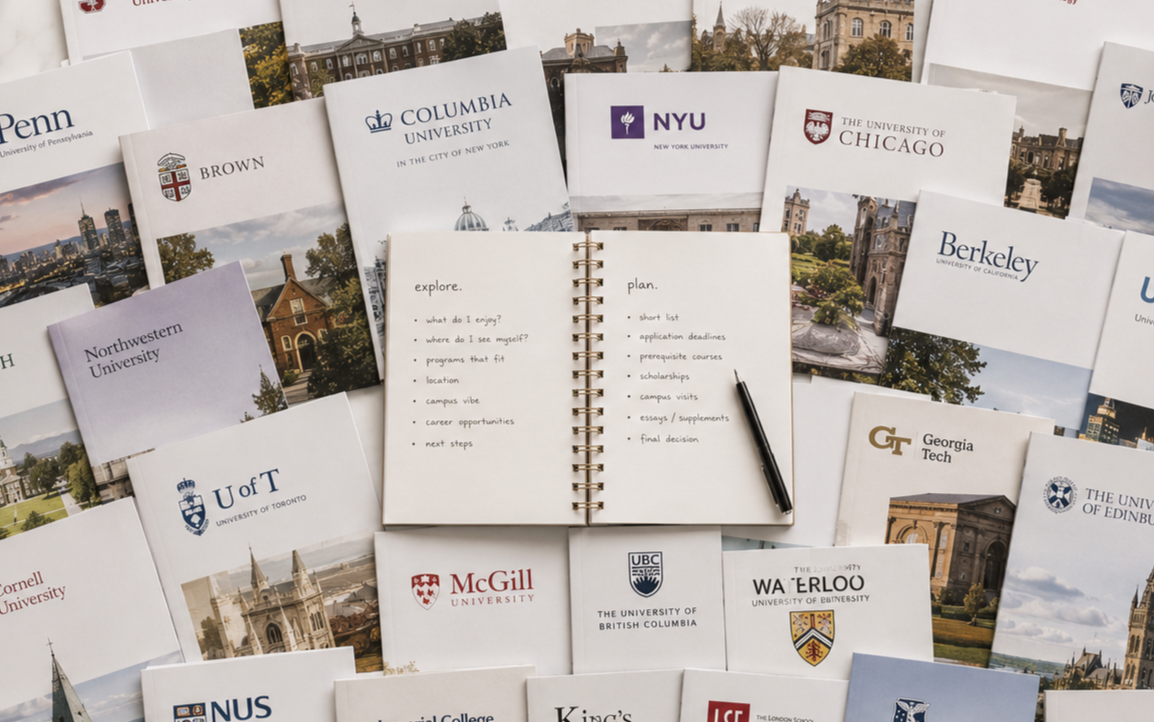
Think back to when you applied to university or college. You probably picked a couple of schools, filled out an application, maybe talked to your guidance counsellor once, and that was more or less it.
Things look very different for our kids. The path after high school has become genuinely overwhelming, and it has nothing to do with this generation being less capable. There is simply far more to sort through now. The number of programs and pathways has grown, competition for the same spots is fiercer, and applications that used to be a single form now often want supplementary essays, portfolios, or even video submissions. Scholarship deadlines tend to pass months before most families have even started thinking about them. All of this lands on a sixteen or seventeen-year-old who is also trying to keep their grades up and have something resembling a normal life.
No wonder I'm hearing from more and more parents who want help. Let me explain what's really going on.
Post-secondary planning isn't what it used to be
The first thing families wrestle with is whether university is even the right move. For some teens, a college program or an apprenticeship is a much better fit, and for others, a gap year makes more sense than rushing into anything. If university is the goal, the next question is where, and plenty of families are now looking at schools in the US or the UK, where the application systems work completely differently and start earlier. Then comes the question of what to actually study, which is hard to answer when so many teens honestly don't know yet. On top of all that, the prerequisite courses needed for certain programs often had to be chosen back in Grade 10, long before any of this was on anyone's radar.
Once those big decisions are made, the logistics begin. Application portals, deadlines, reference letters, residence forms, and the scholarship and bursary paperwork that nobody enjoys all have to be managed in a fairly narrow window across Grade 11 and 12, while your teen is busy with everything else in their life.
It's a lot to carry, and most of it falls outside what a parent or a busy teenager can reasonably figure out alone.
The discrepancy in the public vs private debate that nobody mentions
I speak with families all the time who are weighing public against private school. They ask about class sizes, test scores, the building, the reputation. Those are all fair things to ask about. The one thing that almost never comes up is the guidance and post-secondary support their child will actually receive, and it happens to be one of the biggest differences between the two systems.
At many private and independent schools, post-secondary counselling is its own dedicated role. There are staff whose entire job is helping students figure out their pathway and stay on top of everything an application demands. At some schools, work starts as early as Grade 9, and the number of students each counsellor looks after is a fraction of what you'll find down the road in the public system.
What's happening in a lot of public high schools looks nothing like that.
Public guidance counsellors are stretched far too thin
I want to be careful here, because none of this is a knock on guidance counsellors. The ones I've worked with are hardworking people who genuinely care about kids. The real problem is that we ask far too few of them to do far too much.
In Ontario, a secondary school that has a guidance counsellor runs at roughly 396 students for every one of them, on average. In about one in ten schools that figure climbs to around 826. The standard often held up as reasonable sits closer to 250 to one. Most elementary schools, meanwhile, have no guidance counsellor at all.
Picture one person responsible for several hundred teenagers, and then remember that post-secondary planning is only a small slice of the job. That same counsellor manages course selection and timetable changes for the whole school, steps in when a student is in crisis, handles mental health concerns and conflicts, and works through a constant pile of administrative tasks. When a teen needs help today, that has to come first, and it should.
So the thing that quietly gets squeezed is the slow, individual conversation about your child's future, the kind where someone sits down and really digs into who this young person is and what might suit them. There just aren't enough hours in the day for it.
This is the gap I watch families fall into year after year. Their child isn't in crisis, and their marks are fine, so nobody is worried about them, and they drift all the way to Grade 12 without anyone ever helping them think hard about what comes next. Then the applications open, the panic sets in, and the whole family ends up scrambling.
What good post-secondary navigation actually looks like
When a teen finally gets real, focused support, the whole experience changes. It begins with the young person rather than the application. Before anyone talks about specific schools, you spend time understanding who they are, how they learn, and what kind of environment brings out their best. Everything else gets built on top of that.
From there you can put together a realistic list of programs that genuinely suit them, with a healthy mix of ambitious and safer choices. Part of the work is practical, like making sure prerequisite courses are locked in early so no gap turns up at the worst possible moment, and mapping out a timeline so the deadlines stop feeling like a threat. Part of it is helping with the pieces teens find most intimidating, such as writing an essay or preparing for an interview. There is also real money sitting in scholarships and bursaries that most families never claim, and someone has to go after it.
Handled well, the process takes the weight off your teenager and off you, and the last-minute panic gets replaced with a plan you can actually feel calm about.
Why parents are getting outside help
So let me come back to where I started. Why are more parents bringing in a post-secondary consultant?
A big part of it is that they've come to see their child's future as too important to leave to a system that, through no fault of the people inside it, simply runs out of time. They want their teen to have someone in their corner who knows the territory and can give them proper, undivided attention.
There's also an honest truth about doing this as a parent. You love your kid, but you're often the one nagging them about deadlines, too, and that mix doesn't always go well. Bringing in someone from outside the family tends to change the tone of the whole thing. The reminders and the harder questions land very differently coming from a knowledgeable outsider than they do coming from mom or dad at the dinner table.
Where we come in
This is the reason we've added post-secondary navigation to what we offer at The Parent Advocate.
Our post-secondary navigation specialist, Alex Warrick, has worked in Toronto’s top independent schools and has helped so many students find their right path forward after high school.
She sits down with your teen, takes the time to get to know them properly, and builds a plan for life after high school that genuinely fits, whether that turns out to be university, college, an apprenticeship, or something else altogether. Together, she’ll help them choose schools and programs, and then work backwards to make sure they don’t make a misstep. Your teen heads into their next chapter feeling ready, and you finally get to stop lying awake wondering whether something important slipped through the cracks.
Fifteen rushed minutes with a counsellor who's responsible for hundreds of other students isn't enough for a decision this big. Your child's next step deserves a real plan.